Episode Transcript
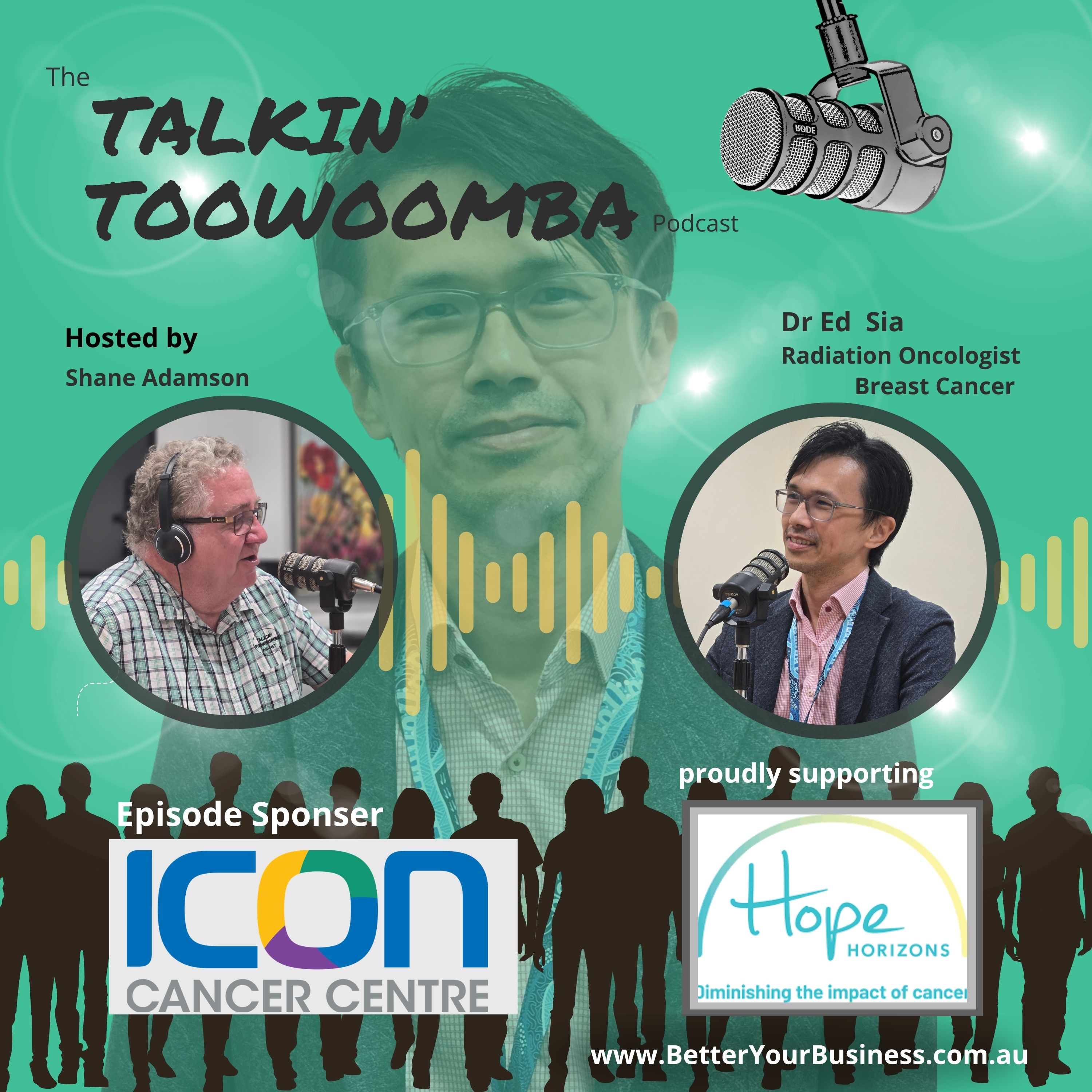
[00:00:03] Speaker A: Welcome to Talkin Toowoomba, the podcast sharing real stories that matter. We're proud to partner with Hope Horizons, shining a light on the journeys of locals impacted by cancer and the incredible people who walk beside them every step of the way. Today's episode is brought to you by ICON Cancer Centre Toowoomba. The team at ICON Toowoomba have been caring for local cancer patients since opening in 2007.
Located on site at St Andrews Cancer Care Centre, ICON Toowoomba provides radiotherapy treatment for all cancer types, delivered by an experienced team who are dedicated to ensuring patients and their loved ones receive exceptional care every step of the way.
ICON Toowoomba also offers day oncology and haematology consulting. Patients are seen by one doctor for the duration of the treatment. A quick note before we dive in. The content of the Talk and Toowoomba podcast is provided for general information and community interest only. It shouldn't be taken as professional, medical, financial or legal advice and must not be relied upon as such.
Please seek independent, qualified advice relevant to your own circumstances before making any decision.
Now, let's get into today's conversation.
[00:01:24] Speaker B: In today's episode, we're chatting with Dr. Ed Seeger, who's a radiation oncologist here at the Icon Cancer Centre.
Welcome to the podcast.
[00:01:34] Speaker C: Thank you for having me. It's a pleasure to be here.
[00:01:37] Speaker B: Can I call you Dr. Ed?
[00:01:38] Speaker C: Yes, please. Ed.
[00:01:40] Speaker B: Ed. Okay.
[00:01:41] Speaker A: All right, Ed.
[00:01:41] Speaker B: What is radiotherapy, especially in relation to breast cancer?
[00:01:47] Speaker C: Radiotherapy, or radiation therapy uses high energy X rays to destroy microscopic cancer cells. It does so by damaging the DNA in the cells so they cannot grow or multiply.
Modern radiotherapy nowadays is highly targeted. It's a localised treatment primarily used to eliminate any remaining cancer cells and reduce the risk of the cancer returning.
In regards to breast cancer is delivered in multiple situations.
1. After patients have had their surgery, they have kept their breasts after lumpectomy, Radiation treatment is routinely recommended.
In certain cases after their breast been removed or after mastectomy, radiation treatment is sometimes offered and in other cases where unfortunate cases where there's recurrence of the cancer. In metastatic disease, radiation treatment is used to shrink tumors and to relieve symptoms such as pain.
It is part of a multidisciplinary treatment for breast cancer.
[00:03:04] Speaker B: Okay, with this approach, breast cancer is treated with surgery, chemotherapy, radiotherapy. What is the sequencing of that treatment?
[00:03:15] Speaker C: The sequencing of which treatment comes first has changed over the years.
In the past, it used to be always surgery first, then depending on what they find after surgery, what they find under the microscope. Patients can Then go on to have chemotherapy or not following that, then they have radiotherapy.
But nowadays for certain types of breast cancer, it is more beneficial to have chemotherapy first up front, then you have surgery and then have radiation at the end.
The timing to start the radiation treatment after surgery is generally about six to eight weeks.
Post chemotherapy is about three to four weeks.
[00:04:01] Speaker B: Okay, so what would be the most common effects of radiation?
[00:04:06] Speaker C: Radiation treatment is a localised treatment where the side effects of treatment occurs. Where the radiation is delivered. The majority of the side effects occurs in the period the radiation therapy is delivered.
For example, patients receiving breast radiation treatment after breast surgery. Side effects can include irritation to the skin, can get a bit of itch and very mild pain.
Other side effects patients can get include tiredness and then there are more uncommon side effects such as cough.
With modern radiation technique nowadays, which are much more precise, the treatment is actually very well tolerated. Patients carry on working whilst on treatment.
[00:04:53] Speaker B: Are there any patients with different skin types or more susceptible to these type of reactions?
[00:04:59] Speaker C: It is true that patients with fairer complexions have more obvious reactions such as redness, peeling and dryness.
But patients with darker skin tone present slightly differently. For example, more darkening of the skin during treatment.
However, skin color on its own does not dictate whether a patient is more biologically sensitive to radiotherapy.
A number of factors that come into play, for example the patient's genetics, total radiation dose given each day, what we call dose per fraction, which part of the body, high body mass index. Smoking is a big one.
Patients how well they look after their skin during treatment.
The key thing is the treating team, such as the nurses. The doctors review the patients on treatment very regularly and then we manage the side effects accordingly as they appear.
[00:06:01] Speaker B: Okay. Is there anything a patient can do to prevent these reactions leading to the radiotherapy?
[00:06:09] Speaker C: There are a few things where patients can do to preempt side effects.
For example, good wound healing after surgery is important. Prevent any infection from happening.
Stop smoking always helps. While you're waiting for the radiation to start, you could start moisturizing with paraffin based cream during treatment.
Obviously avoid any sun damage like a sunburnt. All of this can help minimize side effects during treatment.
[00:06:39] Speaker B: So there's a lot of planning for them to start their treatment. What should be patients expect?
[00:06:46] Speaker C: Obviously, the first step is to make an appointment to see the radiation oncologist for the initial consultation.
In that meeting, you obviously meet the specialist. We will go through the results of the investigations, the rationale of radiotherapy, the logistics of treatment.
We'll obviously go through some of the potential side effects of treatment.
And we'll get patients to sign a consent form.
Following that initial consultation, we'll then book patient to come back in again for a mapping visit, or what we call a simulation scan.
That takes a bit longer, takes about an hour.
We get patients into position for treatment, we do a CT scan and then patients go home. And over a period, about 10 days, we work on the radiation plan. In the background, the radiation therapists, the physicists and the radiation oncologists to come up with the best plan suited for the patients.
Following that, the patient then returns to start the radiation treatment. So in general, what I tell my patients from initial consultation to the start of radiation treatment, first fraction is about two to three weeks.
So it is quite important for us to receive the referral in a timely manner.
[00:08:10] Speaker B: So what do patients actually experience when they're having the treatment?
[00:08:14] Speaker C: I tell patients when having radiation treatment is just like having X ray, more similar to having a CT scan. The treatment itself really only takes about 10 to 15 minutes.
They lay down on their back, arms above their head. Quite obviously they've gone through the simulation visit where they've been placed in the most comfortable position. So they have to do it every day over three weeks.
Machine then goes around and gives the radiation. The machine, we call that as a linear accelerator. The patient does not feel the beam, they don't see the beam, they are not radioactive after treatment and then they repeat that the next day. It's relatively pretty straightforward treatment for patients.
[00:08:59] Speaker B: So what is the normal length or duration of a radiation treatment schedule and how many treatments do patients normally receive?
[00:09:07] Speaker C: The trend nowadays is for shorter treatment. There's a lot of research going into supporting such shorter regimens. Years gone by. Ten to 15 years ago, patients would have had treatment about over a five to six week period.
We don't do that much nowadays, just in very specific cases.
Trials have been done in many countries, the uk, Canada, America and Australia, which support the use of such shorter course of treatment. It's generally given over three weeks daily, weekdays only, and in some certain cases can be as short as five days. And this is with no compromise to the outcome of the results of the treatment.
Obviously, radiation oncologists are guided by guidelines which we use to tailor treatment for our patients.
This, understandably, in our region this is a lot more convenient for our patients. A lot of patients come out from far west, you know, they need to live their lives, have children, take to school, they need to run their businesses.
So these are the options that we run through with patients in their initial consultations.
[00:10:23] Speaker B: Okay, so what sort of follow up for patients happen after the treatment?
[00:10:28] Speaker C: Any cancer is best treated with a multidisciplinary approach. Certainly with breast cancer, there's involvement of the surgeons, the medical oncologist and radiation oncologists. We discuss these cases at breast meetings. Treatment nowadays are increasingly more complex and there are a lot more treatment options, which is good for patients.
So in terms of follow up, it will be between the three specialists. Patients will need at least a breast scan, a mammogram and ultrasound, and which is organized by the surgeons. Quite often patients are on hormone blocking tablets, so they will have ongoing follow up with the medical oncologist.
With the radiation oncologist, the follow ups tend to be a bit shorter. Once they have recovered from the immediate effects of radiotherapy, we tend to discharge them back to the other two specialists.
But obviously, if patients run into trouble, we always encourage patients to reach out to a radiation oncologist. We can always be reached out for questions and happy to see them again.
[00:11:34] Speaker B: Are there any sort of late side effects that come about from radiotherapy?
[00:11:40] Speaker C: Yes, the acute side effects, ones that patients get during treatment are in most parts manageable, and it sort of resolves on its own.
But there is a potential of late side effects, late sequelae or radiotherapy.
These are more related to the skin and soft tissue, such as skin thickening, what we call skin fibrosis. It can affect reconstructed breasts, just like the patients with breast implants.
There are also the rare, potentially more concerning complications, which are the impact on the underlying organs, such as the heart and the lung.
Some studies to say that linking breast radiotherapy with increased risk of cardiovascular disease.
The caveat is these are older studies where with older techniques, the treatments are not as personalized.
With modern techniques nowadays, which is what we do here in Toowoomba, we are much better at assessing the dose, going to the heart and going to the lungs.
The risk of cardiovascular disease nowadays are actually very small.
There are also very incredibly rare, but very serious complications, which is the risk of radiation causing second cancer to develop.
This is in the area where the radiation is delivered. This happens generally about 10 to 15 years after treatment. Some of the cancer they can get from this radiation. Radiation exposures are what we call sarcomas.
Regardless, having said all of this, the benefits of radiation treatment far outweighs the risks.
[00:13:28] Speaker B: Okay, so patients sometimes need the lymph nodes treated. Can you tell me about the risk of lymphomia? Is that how you pronounce it?
[00:13:39] Speaker C: Lymphedema, Lymphedema.
[00:13:41] Speaker B: I'm never good with medical terms for breast cancer patients. And how is this managed?
[00:13:46] Speaker C: Lymphedema occurs when the lymphatic system is blocked or damaged from surgery, from radiation.
What happens then? Fluids. You get a fluid buildup commonly in the arm, hand. You can get them also in the breast and chest wall and the side of where the treatment occurred.
The risk of irradiation after surgery is worsening lymphoedema and obviously this can be quite debilitating. The key thing is lymphoedema screening and prevention. Certainly at our centre we do provide that. We use a machine called sozo, which can detect very early fluid changes before any swelling occurs.
And obviously we continue to monitor patients in the appointments. We see them, we examine them and then if any signs of early lymphedema, we refer them on early to the lymphedema therapist or the physiotherapist. And obviously patients need to be educated about the signs and symptoms of lymphoedema and the prevention in terms of management of it. The physiotherapist or the lymphedema therapist may recommend compression garments, bandaging exercises, massages, skin care.
Preventing infection is very important, but certainly we continue to monitor the patients for up to one to three years after the breast cancer treatment is finished.
[00:15:20] Speaker B: So tell me, Lored, in reoccurrence of breast cancer, can patients have further radiotherapy?
[00:15:28] Speaker C: The short answer is yes. Yes. But it depends on where the recurrence is. In metastatic cancer, for example, where the disease has returned and spread to other parts of the body, like to the bone, radiotherapy can certainly be given to alleviate symptoms.
We can do this with very highly focused radiation treatment, what we call stereotactic radiation treatment.
In cases where there's recurrence in the body, where patients have had previous radiotherapy in the past, there are a lot of factors to be considered, like how long ago was the radiation treatment, how much dose was delivered, how did patients react in the past?
So it's quite a complex discussion, but without going into too much detail, detail, all of this will be discussed at initial consultation. We have to weigh up the risk and benefits of reiradiation.
[00:16:32] Speaker B: Okay, so where can local Toowoomba breast cancer patients access support?
[00:16:39] Speaker C: The breast cancer patients in Toowoomba are actually quite well supported. There's quite a variety of local support services.
I think the first, good first point of contact would be the Cancer Council Queensland.
There's also the Blush Cancer Care, but hopes Horizons offers free allied health wellness services. You can tell me a bit more on that, Shane. Actually, for patients living with cancer includes counselling and supportive programs.
In terms of accommodation, patients unassembly, they can't travel daily for treatment if they're living two to three hours away. There are certainly accommodations such as Cancer council lodge, Olive McMahon Lodge provides accommodation.
I just want to add as well, these are all support for breast cancer. I just want to emphasize that men do get breast cancer. It's rare, but they can get. And they can certainly reach out to these services as well.
[00:17:45] Speaker B: I was going to ask you that. I have heard that men can get. Is it just like a lot of cancers, it's just that you happen to get it, or is there certain things that a man does or shouldn't do that might bring about breast cancer?
[00:18:01] Speaker C: Yeah, spontaneous cases where men get breast cancer. They do have breast tissue that can develop into cancerous tissue, but it is also linked with what we call cancers that run in the family, familial breast cancer. So for example, as you know, the widely known the BRCA gene that's associated with men and breast cancer.
So if you do have a family history, certainly probably worthwhile having a discussion with your GP about ongoing surveillance and testing that they may need.
[00:18:38] Speaker B: Doctor, I want to thank you for your time in coming onto the podcast this morning and talking about breast cancer. It's like so many other cancers that we sometimes have to deal with. It's good to get the information and listen to someone who's an expert on it and can provide the insight that you need. Has it ever been, I'm going to put you on the spot here a bit now. Has it ever been someone ask you a question where you've gone, oh, okay, I hadn't thought of that one. And obviously you would have been able to answer them or done the research to answer them. Is there any question that's over your years of experience that stuck out like there was something that you hadn't thought of and that, yes, that information needs to be imparted on to the patient?
[00:19:28] Speaker C: I think it's getting a bit more common now if you get them because a lot of patients do their research over the Internet. Can't think of one now, but not often, but not uncommon.
Patients come across a news article or watch something over the Channel 7 news and they brought it up and said that. What do you think of this?
A lot of. I must say it is important that this information, all the new developments are out in the public to increase awareness of breast cancer.
But a lot of these developments are still in very early stages. It's generally not applicable to all the patients. So quite often I have to guide them along what is tried and tested with good, strong evidence.
Certainly I'm not discouraging patients from doing their own research, but again, that's part of my job, to sort of guide them along sort of the tried and tested path, if you put it that way.
[00:20:26] Speaker B: So, yeah, it's all well and good to do a bit of your own research and so forth, but anything that you come across, you should discuss it with your oncologist or your therapist or whoever that you're dealing with at the time about this particular treatment, whatever that may be, to make sure that you're not acting on information that perhaps isn't accurate or yet, as you said, to be proved and tested.
[00:20:51] Speaker C: Absolutely. I think also to alleviate your anxiety, isn't it obviously natural to feel anxious with the diagnosis of a cancer? I find you keep asking questions, answering your own questions. Discuss with your oncologist. That will go a long way into self easing that nervousness.
[00:21:09] Speaker B: Is there anything else you want to add before we wind up today, Doctor?
[00:21:12] Speaker C: I think to all the women out there, go get yourself checked, speak to your doctors and don't be scared to see your specialist.
[00:21:22] Speaker B: Well, once again, thanks for coming in. It's been great to have you on the podcast.
[00:21:25] Speaker C: Thank you.
[00:21:26] Speaker A: Thanks for joining us on Talkin Toowoomba. If today's episode inspired you, please share it to help spread hope and connection right across our community.
A special thanks to our sponsor, Icon Cancer Centre Toowoomba. Since 2007, the team at ICON Toowoomba has provided expert cancer care from St Andrews Cancer Care Centre, delivering radiotherapy, oncology and haematology services with personalised support every step of the way.
And as always, a big thank you to Hope Horizons for their incredible contribution to local families living with cancer. The content of Talk and Dormer podcast is provided for general information and community interest only.
It should not be taken as professional, medical, financial or legal advice and must not be relied upon as such.
Please seek qualified advice relevant to your own circumstances before making any decision.
Until next time, keep talking to Wumba.